

Facial Aesthetics
Open vs Closed Rhinoplasty: What Is the Difference?
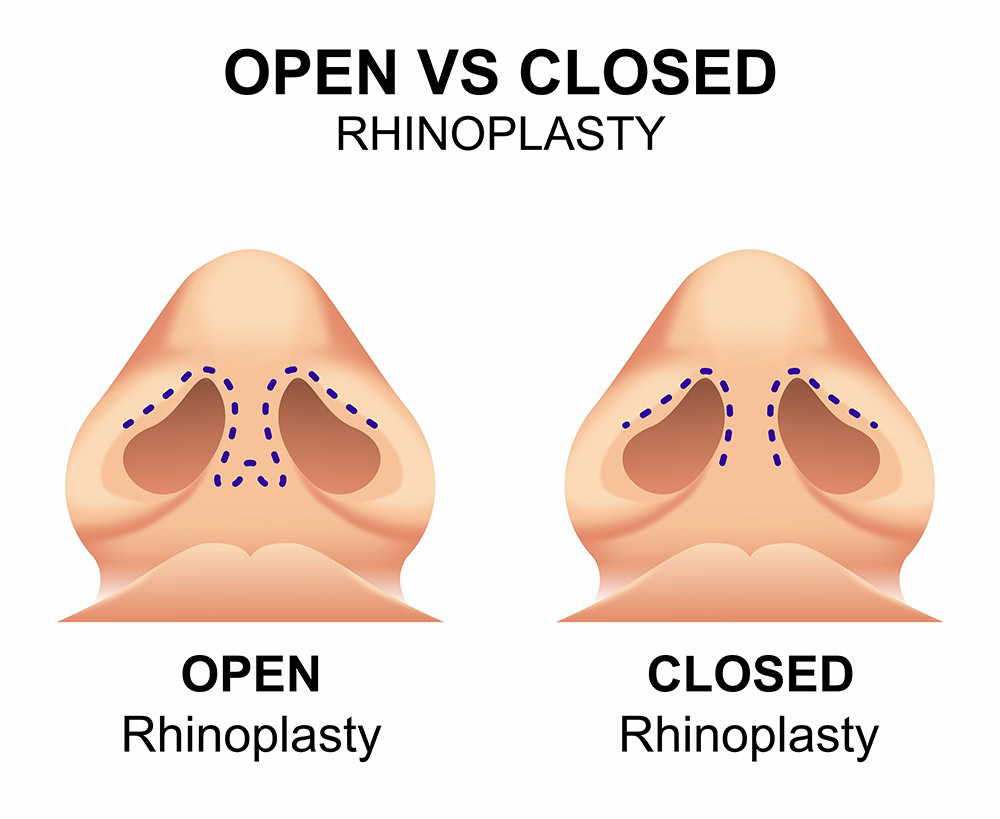
Rhinoplasty can be performed using an open or closed technique. With closed rhinoplasty, the incisions are made inside the nostrils. Open rhinoplasty includes an additional small incision across the columella, which is the strip of tissue between the nostrils. This allows the skin to be lifted so the nasal framework can be viewed more directly.
The choice between open vs closed rhinoplasty affects the access available during surgery, the position of the scars and how particular structural changes are performed. This blog compares those differences, explains what each technique may be used for and looks at the factors involved in selecting an approach.
The Main Differences Between Open and Closed Rhinoplasty
Both techniques can be used to change the shape and structure of the nose. The differences concern how the nasal framework is accessed, how much of it can be seen during surgery and where the incisions are placed.
Incisions and Surgical Access in Open and Closed Rhinoplasty
Closed rhinoplasty is performed through incisions inside the nostrils. Through these openings, the surgeon can reach selected areas of cartilage and bone without lifting the skin from the entire nasal framework. The view is more restricted than with an open approach, but it may provide sufficient access for the changes included in the surgical plan.
Open rhinoplasty uses internal incisions together with a small incision across the columella. The skin and soft tissue are carefully lifted, providing a more direct view of the cartilage, bone and supporting structures. This wider access can assist with detailed assessment and structural work during the operation.
Surgical Changes Addressed Through Each Rhinoplasty Technique
The same area of the nose may sometimes be treated using either technique. The approach depends on the extent of the planned correction and the access needed to perform it accurately.
The two techniques may be used in the following circumstances:
- Open rhinoplasty: Wider access may be useful for detailed nasal tip reshaping, cartilage grafting, significant asymmetry, structural reconstruction, or revision surgery.
- Closed rhinoplasty: Internal access may be suitable for selected changes to the bridge, tip or profile where the planned correction can be completed through the nostrils.
Scarring After Open and Closed Rhinoplasty
Closed rhinoplasty does not create an external incision scar, although the incisions inside the nostrils still need to heal. Open rhinoplasty leaves a small scar across the columella beneath the nasal tip. Its eventual appearance depends on skin characteristics, individual scar formation, incision placement and aftercare. It cannot be assumed that the scar will become invisible.
Swelling and Recovery After Open and Closed Rhinoplasty
Swelling, bruising and congestion can occur with either technique. Open rhinoplasty can result in more persistent swelling around the nasal tip because the skin and soft tissue have been lifted more extensively. The amount of structural work performed also has a significant effect on recovery. A splint is generally worn during early healing, while residual swelling and changes to the nasal shape can continue for at least 12 months.
The Technique Does Not Define the Extent of Rhinoplasty
The terms open and closed describe the route used to reach the nasal structures. They do not indicate how much surgery is required or the degree of change that will result. A closed procedure can still involve work on the nasal bones, cartilage or septum, while an open approach may be selected because a particular area needs to be seen more clearly.
The technique also does not determine whether the purpose of surgery is cosmetic, functional or a combination of both. Breathing concerns and changes in nasal shape can be addressed through either approach when the anatomy and surgical plan allow it.

How Is the Rhinoplasty Approach Selected?
The assessment considers the external appearance and internal structure of the nose. This includes the nasal bridge, tip, nostrils, septum and the position and strength of the supporting cartilage. Skin thickness, symmetry, breathing concerns and any previous injury or surgery can also influence the technique.
The proposed changes are then considered alongside the access required to complete them. Cartilage grafting, revision surgery or a more involved reconstruction may favour an open approach, while other changes may be completed through internal incisions. Patient preferences form part of the discussion, but the final recommendation must also account for the structural requirements of the procedure.
Open vs Closed Rhinoplasty at Eastern Plastic Surgery
The external incision used during open rhinoplasty is an important difference, but it should not be the only consideration when comparing the techniques. Surgical access, nasal anatomy and the type of correction required all contribute to the decision.
At Eastern Plastic Surgery, we explain why a particular technique has been recommended and what it means for the procedure, scarring and recovery. We also discuss the limitations and possible complications of surgery so that the decision is based on the complete surgical plan rather than incision placement alone.
Frequently Asked Questions
Does open rhinoplasty produce a greater change than closed rhinoplasty?
The extent of the change is not determined by the name of the technique. Both open and closed rhinoplasty can alter the shape and structure of the nose. The approach depends on the access required for the planned correction.
Is closed rhinoplasty less invasive than open rhinoplasty?
Closed rhinoplasty avoids an external columellar incision and involves less lifting of the nasal skin. It can still include significant changes to the bone, cartilage or septum and remains a substantial surgical procedure.
Can the same nasal concerns be treated with either technique?
Some concerns can be addressed using either open or closed rhinoplasty. Others require a particular degree of access or visibility. The anatomy of the nose and the exact correction being planned determine which techniques are realistic options.
Is open rhinoplasty used for revision surgery?
Open rhinoplasty may be selected for revision surgery because it provides direct access to structures affected by prior surgery or internal scar tissue. The closed technique can still be used in selected revision cases where the required changes can be reached internally.
Can open and closed rhinoplasty both address breathing concerns?
Functional changes may form part of either technique. The approach depends on the cause of the breathing difficulty and whether the septum, nasal valves or other internal structures need to be treated.
Does closed rhinoplasty have a shorter recovery?
Closed rhinoplasty may involve less lifting of the nasal skin, but the recovery period also depends on the structural work performed. Changes to the nasal bones, cartilage or septum can still produce swelling and bruising after a closed procedure.
Can the planned rhinoplasty technique change after consultation?
The proposed technique may be refined as the nose is examined and the surgical plan is developed. Any significant change to the intended approach, available alternatives or expected recovery should be explained before informed consent is completed.
Is general anaesthetic used for open and closed rhinoplasty?
Rhinoplasty at Eastern Plastic Surgery is generally performed under general anaesthetic in a private hospital. The anaesthetic and hospital arrangements are discussed during your consultation as part of the individual surgical plan.
Do open and closed rhinoplasty carry different risks?
Both techniques carry risks such as bleeding, infection, scarring, asymmetry, altered sensation, breathing changes and the possibility of revision surgery. The columellar incision and wider surgical exposure used during open rhinoplasty also create additional considerations for scarring, swelling and healing.
How long does it take to see the final rhinoplasty result?
Early changes become visible as bruising and swelling settle, but the nose continues to change over a much longer period. Residual swelling, particularly around the nasal tip, can take at least 12 months to resolve and may persist for longer in some patients.